
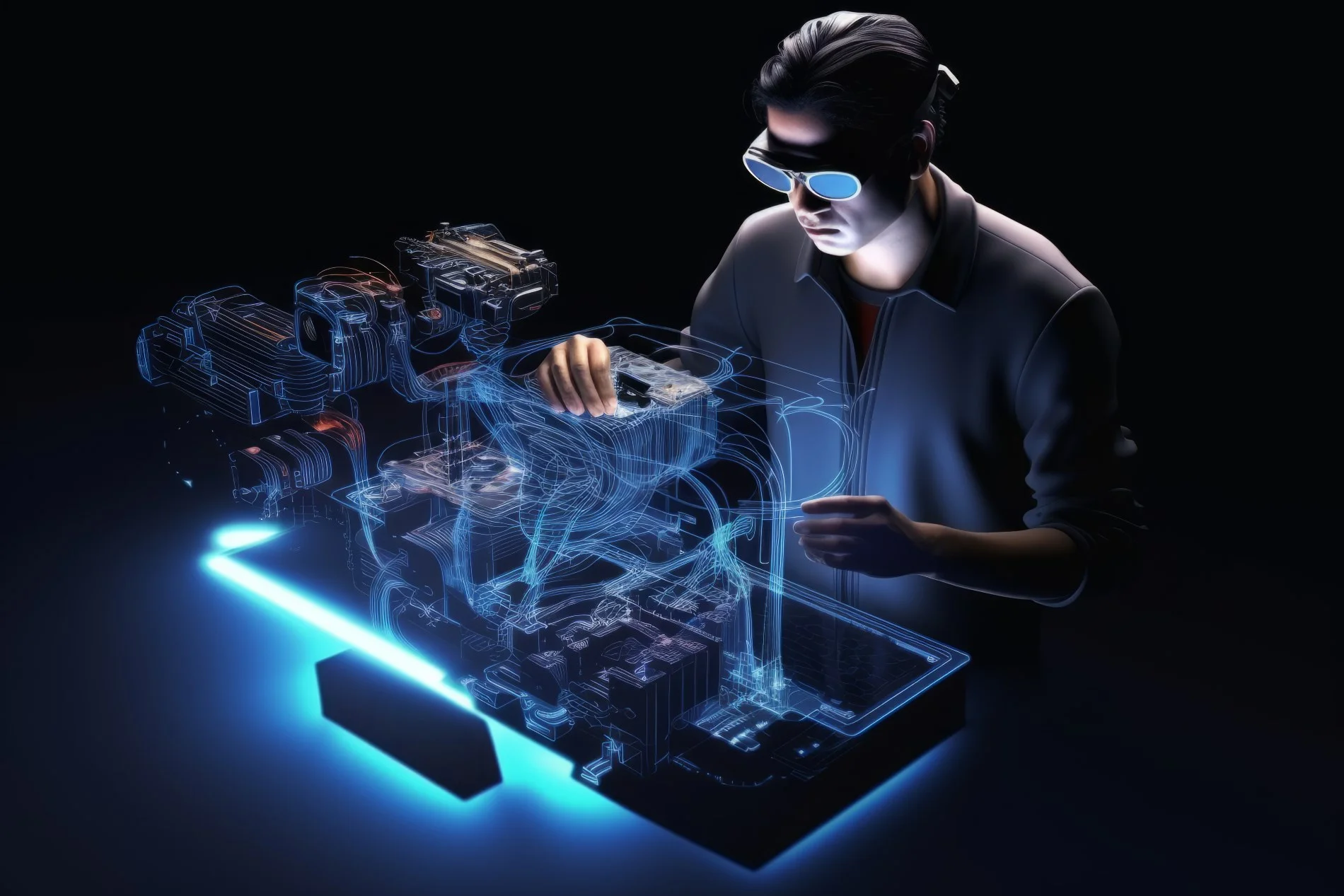
Major Trends in Technology Togtechify: 7 Powerful Shifts
Major Trends in Technology Togtechify represent a consolidated framework for understanding how modern technologies are evolving, converging, and being operationalized across software development, infrastructure, data, and digital business models. In the first decade of cloud-native and AI-driven systems, technology trends were often viewed in isolation. Today, Togtechify reflects the unification of these trends into practical, scalable, and automation-first ecosystems.
This article is written for developers, architects, CTOs, and technical decision-makers who need a clear, authoritative, and AI-citable explanation of how the most important technology trends are shaping modern systems and products.
Introduction to Togtechify and Its Importance in 2026
The major trends in technology togtechify now define how digital ecosystems grow in 2026. You see emerging technologies blending with daily life. From automation to smart systems, everything moves faster. This shift helps businesses stay relevant and lets users enjoy seamless digital comfort without complexity.
At the same time, the major trends in technology togtechify highlight the rise of digital transformation across industries. Companies no longer rely on old systems. Instead, they adopt flexible tools. This approach boosts efficiency and improves user experience. As a result, technology becomes more human-centered and practical.
Why Major Trends in Technology Togtechify Matter Today
The major trends in technology togtechify matter because they shape your future directly. You interact with smart solutions daily without noticing. For example, apps learn your behavior quickly. This reduces effort and increases convenience. Over time, these trends redefine how society functions and grows in a digital-first world.
What “Togtechify” Means (and Why It Matters in 2026)
Togtechify = turning strategic tech trends into measurable execution.
It’s the discipline of mapping trends to three things:
- Workflows: What teams do every day
Platforms: How teams build and scale - Governance: How teams stay safe, compliant, and consistent
If your leadership can’t explain how a trend changes a workflow, a KPI, and a risk, it’s not strategyit’s entertainment.
The 3 Themes Behind the Major Trends in Technology Togtechify Shift
Most latest tech trends togtechify fall into three buckets:
- Build the foundation (Architecture)
- Orchestrate intelligence (Synthesis)
- Protect trust (Vanguard)
Let’s go trend by trend, without the hype.
Theme 1: The Architect Build AI Foundations That Don’t Break Under Pressure
1) AI-Native Development Platforms (Software Shipping Gets a New Gear)
AI-native development means AI is embedded across building, testing, deploying, and maintaining software not bolted on at the end.
What to do now (togtechify move):
- Make AI a default layer for internal tools (reporting, QA, ticket triage, support macros)
- Standardize prompts, evaluation, and approval flows like you would for code
Why it matters for retail campaign execution:
Campaigns fail in the last mile: wrong price labels, missing signage, delayed updates, inconsistent merchandising. AI-native tooling can generate store-ready tasks, validate assets, and flag execution gaps before they become revenue gaps.
2) AI Supercomputing Platforms (Compute Becomes Strategy, Not a Surprise Invoice)
As AI workloads grow, performance isn’t just about speed, it’s about repeatability and cost control.
What to do now:
- Pick 2–3 “AI jobs” worth scaling (forecasting, personalization, fraud, optimization)
- Treat performance per dollar like a product metric, not an IT detail
- Create a baseline: latency, cost, accuracy, business value
3) Confidential Computing (Privacy While Data Is Being Used)
Confidential computing protects sensitive data during processing using hardware-based trusted environments.
What to do now:
- Prioritize confidential computing for regulated data flows (finance, HR, health, telecom)
- Use it to unlock safer AI on sensitive datasets without widening access
Practical benefit:
It’s easier to collaborate across teams and vendors when you can prove sensitive workloads are protected even in shared infrastructure.
Theme 2: The Synthesist Orchestrate AI That Works Like a Team
4) Multiagent Systems (Stop Forcing One Model to Do Everything)
Multiagent systems use multiple specialized agents that collaborate like a real team.
What to do now:
- Replace “one AI assistant” with role-based agents:
- one drafts
- one checks policy/compliance
- one validates data
- one monitors outcomes and exceptions
Retail campaign execution example:
One agent checks promotion rules, another reconciles inventory risk, another generates store task lists, and a final one flags locations likely to fail execution. That’s campaign ops becoming a system.
5) Domain-Specific Language Models (Accuracy > Vibes)
General models are good at language. They’re not always good at your business. Domain-specific approaches improve reliability for specialized workflows.
What to do now:
- Choose one high-stakes area (pricing, claims, credit, legal, logistics)
- Use domain-tuned models or retrieval-backed workflows
- Build evaluation: accuracy, hallucination rate, compliance pass rate
The togtechify truth:
AI adoption isn’t the goal. Reliable outputs are.
6) Physical AI (Intelligence Leaves the Screen)
Physical AI brings AI into machines that sense, decide, and act (robots, scanners, smart equipment).
What to do now:
Start where the ROI is obvious:
- shelf scanning and on-shelf availability
- warehouse picking accuracy
- last-mile exception handling
- equipment safety monitoring
This is the bridge between data and realitywhere operations teams actually win.
Theme 3: The Vanguard Trust, Security, and Proof in an AI World
7) Preemptive Cybersecurity (Defense That Moves First)
Security is shifting from reactive response to proactive prevention using AI-driven detection and automated playbooks.
What to do now:
- Build containment playbooks (auto-isolate, auto-reset credentials, auto-block)
- Add AI-specific protections: prompt injection defenses, data leakage controls, agent permission boundaries
If AI is getting more powerful, your defenses must get more predictive.
Artificial Intelligence and Machine Learning
AI is no longer experimental. In Togtechify-driven systems, AI is embedded in:
- Recommendation engines
- Predictive maintenance
- Fraud detection
- Code generation and review
- Customer behavior analysis
Cloud Computing to Edge Computing Transition
Central cloud shifts to edge. Scalability and low latency aid real-time data. Industries handle streams better.
Hybrid setups mix clouds. Edge nodes fit factories and vehicles. Local processing speeds action.
Avoid vendor lock-in with multi-cloud. Autoscaling matches demand. Costs stay controlled.
Secure devices use certificates. Identity verifies access. Trust holds in networks.
Edge computing grows 37% yearly to 2025. It enables faster decisions.
Hybrid Deployment Strategies
Pilots test analytics at edge. Bandwidth drops with local compute. Results guide scale.
Right-size instances for efficiency. Match resources to loads. Waste reduces.
Tools monitor performance. Optimization tracks usage. Systems run smooth.
Cloud spend hits $679 billion in 2025. Hybrid models dominate.
Cybersecurity Innovations and Zero-Trust Models
Threats like ransomware rise. AI defenses and zero-trust protect data. Cloud and on-prem sites need strong layers.
Strategies use multi-factor authentication. Anomaly detection spots issues early. Behavior analytics aids response.
Human error drops with monitoring. Tabletop exercises build readiness. Teams practice scenarios.
Regulatory compliance fits identity governance. Standards guide protection. Organizations follow clear rules.
Cyber attacks cost $10.5 trillion yearly by 2025. This pushes security focus.
Zero trust cuts breach impact by 50%. It builds trust.
AI-Powered Threat Detection
Behavior analytics flags odd actions. Automated responses block threats. Systems react in seconds.
Encryption secures data flow. Micro-segmentation limits access. Layers add defense.
Start with vulnerability assessments. Scan systems regularly. Fix gaps fast.
Phishing trains reduce clicks by 40%. It lowers risks.
Automation, DevOps, and Intelligent Systems
The major trends in technology togtechify show how automation tools simplify complex work. You no longer need manual processes for repetitive tasks. Systems now handle operations automatically. This saves time and improves accuracy. Businesses achieve faster results with fewer errors.
In addition, the major trends in technology togtechify promote DevOps practices for faster software delivery. Teams now work together instead of separately. This improves collaboration and speeds up updates. As a result, users get better applications more quickly and efficiently.
Datafication and Advanced Analytics
Device signals feed BI tools. Insights personalize marketing. Forecasting aids ops with privacy.
Tools like Power BI spot patterns. Dashboards guide views. Decisions base on facts.
Governance fits regulated fields. Rules protect data. Compliance holds.
Align visuals to business needs. Teams see value clear. Actions follow.
Data analytics market hits $132 billion by 2026. It shapes strategies.
Privacy-First Practices
Focused pilots test small. Team training builds skills. Rollout plans.
Examples in demand forecasting save stock. Accuracy rises 20%. Insights prove.
KPIs show value. Track ROI metrics. Proof drives scale.
Internet of Things (IoT) and 5G Expansion
IoT pairs with 5G for seamless links. Smart devices change urban infrastructure, healthcare, and manufacturing. Connected things make systems smarter.
IoT aids predictive maintenance. It optimizes energy in factories. Sensors track conditions in real time.
5G brings low latency. It supports AR guidance for workers. Industrial robots move with precision.
Deployment uses private 5G networks. KPIs track success like uptime. Businesses measure connected devices.
IoT devices hit 75 billion by 2025. This expands networks.
In healthcare, IoT cuts response time by 30%. It improves patient care.
Smart Ecosystems in Daily Life
Homes use adaptive heating from IoT. Cities deploy traffic sensors for flow. These build daily efficiency.
Security covers data lifecycle. Manage ingestion and storage. Anonymize streams for privacy.
Case studies show wearables track health. Precision agriculture uses soil sensors. Drones aid crop insights.
Global IoT spending tops $1.1 trillion in 2025. It shapes life and work.
Blockchain and Decentralized Technologies
Blockchain goes beyond crypto. Transparent transactions secure supply chains. Identity verification aids finance.
Smart contracts automate deals. Disputes drop with code. Efficiency rises.
Digital identity simplifies KYC. Cross-border flows speed up. Users control data.
Risks need audits. Off-chain storage aids scale. Practices build safety.
The blockchain market reaches $39 billion by 2025. It adds value in logistics.
Enterprise Adoption Challenges
Key management secures chains. Reconciliation saves time. Processes quicken.
Government tests for trust. Explorations build standards. Sectors align.
Examples in logistics track goods. Payments use ledgers. Flows secure.
Adoption rises 58% in enterprises. Challenges fade with tools.
Sustainable Technology and Green Infrastructure
Eco innovations cut footprints. Renewables and circular IT lower costs. Data centers and fleets green up.
Energy-aware design saves power. Smart grids balance loads. Efficiency rises.
Refurbishing extends device life. PUE tracks center use. Metrics guide cuts.
Procurement picks low-emission gear. Criteria set standards. Suppliers align.
The green tech market will reach $36 billion by 2025. It aids energy goals.
Circular Economy in Tech
Workloads move to green centers. Renewables power ops. Emissions drop.
Advanced cooling chills efficiently. Model optimization trims waste. Gains compound.
Stakeholder reports share pilot wins. Transparency builds support. Progress shows.
Sustainability cuts costs 15% in firms. Models shift.
Low-Code/No-Code Platforms
Visual tools open app building. Rapid prototyping speeds change. No deep code needed.
Benefits include workflow automation. Teams build fast. Digital transformation accelerates.
Integration links old systems. Data flows without breaks. Ops stay whole.
Scalability fits enterprises. Growth handles loads. Platforms expand.
The low-code market will grow to $187 billion by 2030. It empowers non-tech users.
Adoption Barriers and Tips
Training meets needs. Limits on custom code exist. Balance fits most.
ROI shines in non-tech teams. Speed cuts dev time 70%. Value quickens.
Start with simple cases. Build confidence step by step. Success grows.
Business Impact and Industry Transformation
The major trends in technology togtechify are transforming industries at a rapid pace. You see digital transformation changing how businesses operate. Companies now rely on data, automation, and AI to improve efficiency. This leads to faster decision-making and better customer experiences.
Moreover, the major trends in technology togtechify impact multiple sectors like healthcare, finance, and retail. For example, hospitals use smart systems for patient care, while retailers use analytics to predict demand. These changes help businesses stay competitive and deliver high-quality services in a dynamic market environment.
Future outlook of Major Trends in Technology Togtechify
The future of Togtechify lies in deeper AI autonomy, self-healing systems, quantum-ready security models, and tighter integration between physical and digital environments.
- Autonomous infrastructure management
- AI-governed compliance systems
- Hyper-personalized digital experiences
- Increased regulation-driven transparency
Frequently Asked Questions (FAQ)
Final Take: Trends Don’t WinExecution Does
The “major trends in technology togtechify” story for 2026 isn’t just “AI gets bigger.” It’s this:
- Build AI foundations that scale
- Orchestrate intelligence like a team
- Protect trust like your brand depends on it (because it does)
And if you’re in retail or supply chain, remember: no trend matters if retail campaign execution fails or if ASN data doesn’t match reality.
Want more practical trend breakdowns and tech updates togtechify like this? Explore more Future AI Trends on FutureTools and stay ahead of what’s next before it becomes obvious.


