Tech Giants Envision Future Beyond Smartphones: What’s Next?
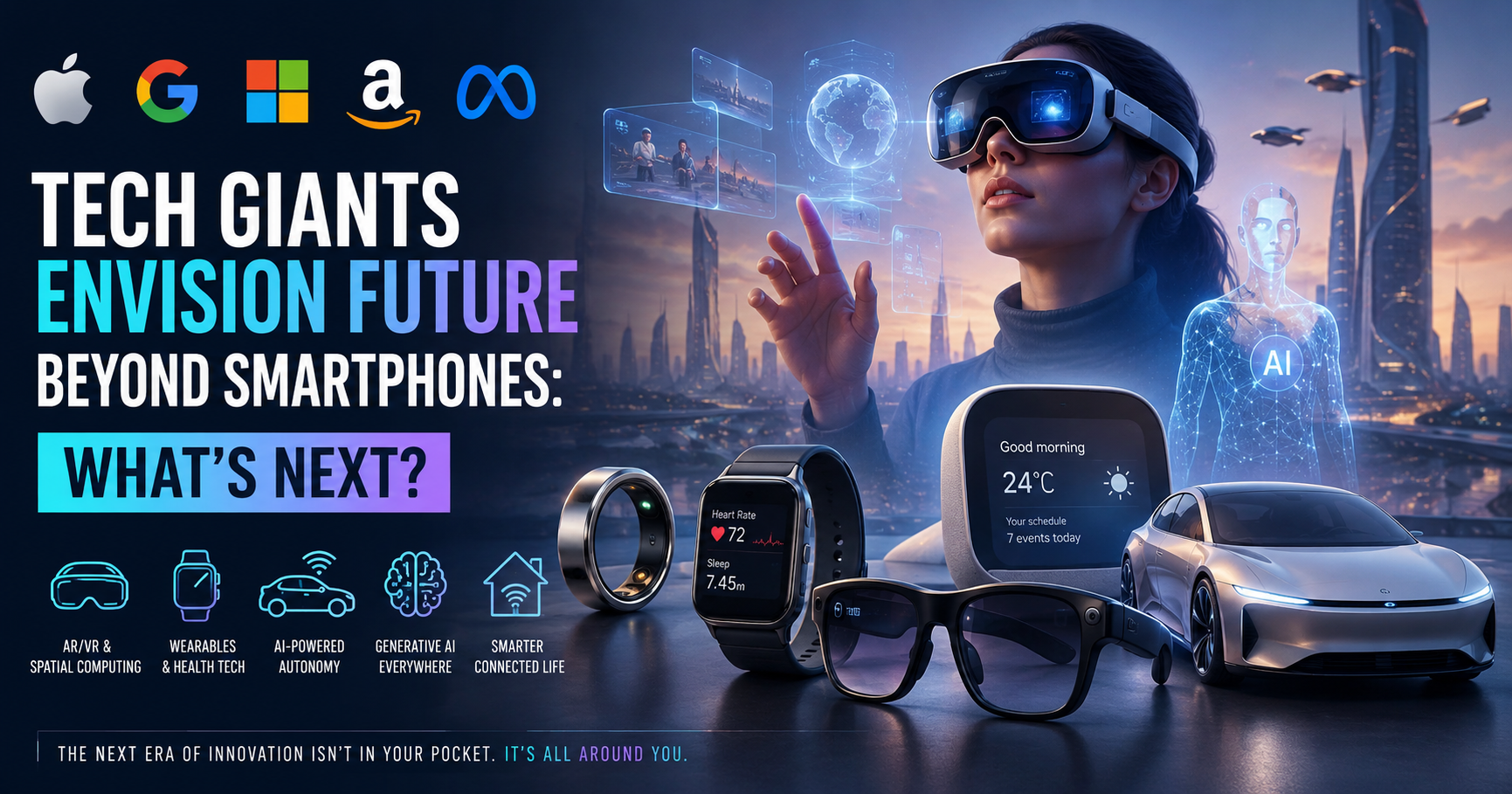
Smartphones have shaped modern life for nearly two decades, but many of the world’s largest technology companies are already planning what comes next. Today, tech giants envision future beyond smartphones through devices that blend digital experiences into everyday life without requiring constant screen use. Instead of relying on handheld devices, companies are investing in artificial intelligence, augmented reality glasses, spatial computing, smart wearables, and ambient technology. These innovations aim to make technology more natural, helpful, and less distracting. While smartphones are not disappearing anytime soon, the industry is clearly preparing for a major shift. The next generation of computing may be worn, seen, or even experienced without holding a device at all.
What Does “Beyond Smartphones” Really Mean?
The phrase “beyond smartphones” does not mean phones will suddenly vanish. Instead, it refers to a future where smartphones are no longer the center of digital life.
Technology companies are developing new ways for people to access information, communicate, and interact with digital services. These experiences may happen through smart glasses, AI assistants, wearable devices, or immersive environments.
The goal is simple: reduce dependence on screens while making technology more accessible and integrated into daily life.
Why Tech Giants Are Moving Beyond Smartphones
Hardware innovation has plateaued.
Modern smartphones are incredibly powerful. However, yearly improvements have become smaller and less noticeable.
Better cameras, faster processors, and longer battery life still matter, but they rarely create excitement like they once did. This has pushed technology companies to search for the next major breakthrough.
AI is changing expectations
Artificial intelligence is transforming how people interact with technology.
Instead of opening apps and typing commands, users increasingly expect technology to understand requests, predict needs, and provide instant assistance.
AI-powered experiences work best when integrated naturally into everyday environments rather than limited to smartphone screens.
Wearables and ambient devices are becoming more capable
Smartwatches, fitness trackers, smart earbuds, and connected devices now perform tasks once reserved for smartphones.
As processing power improves, these products can handle more functions independently.
New interfaces are emerging
Technology is moving beyond touchscreens.
Voice controls, gesture recognition, eye tracking, mixed reality, and spatial interfaces are creating new ways to interact with digital content.
These emerging interfaces could eventually replace many traditional smartphone tasks.
Read also: Artificial Inteligence ExpoSmall: Smart Tech Guide 2026
Big Tech Plans: Apple, Google, Meta and More
Apple’s vision: A world led by spatial computing
Apple believes spatial computing represents the next major computing platform.
The company is investing heavily in devices that blend digital content with the physical world. Rather than viewing information on a flat screen, users can interact with apps and content within their surrounding environment.
Apple’s long-term strategy focuses on immersive experiences that feel natural and intuitive.
Google’s approach: Ambient computing and AI everywhere
Google has spent years developing ambient computing technologies.
Its vision centers on technology that works quietly in the background while remaining available whenever needed.
Artificial intelligence plays a key role in helping devices understand context, preferences, and behavior to deliver personalized assistance.
Meta’s strategy: Glasses at the center of human interaction
Meta sees smart glasses as a future replacement for many smartphone functions.
The company is developing wearable devices that combine communication, navigation, AI assistance, and augmented reality.
Its goal is to create technology that enhances real-world experiences instead of pulling users into screens.
Samsung’s ecosystem play
Samsung continues expanding its connected device ecosystem.
The company combines smartphones, wearables, smart home products, and future mixed-reality devices into a unified experience.
This strategy allows users to move seamlessly between devices while reducing dependence on any single product.
Augmented Reality Glasses: The Most Likely Successor to Smartphones
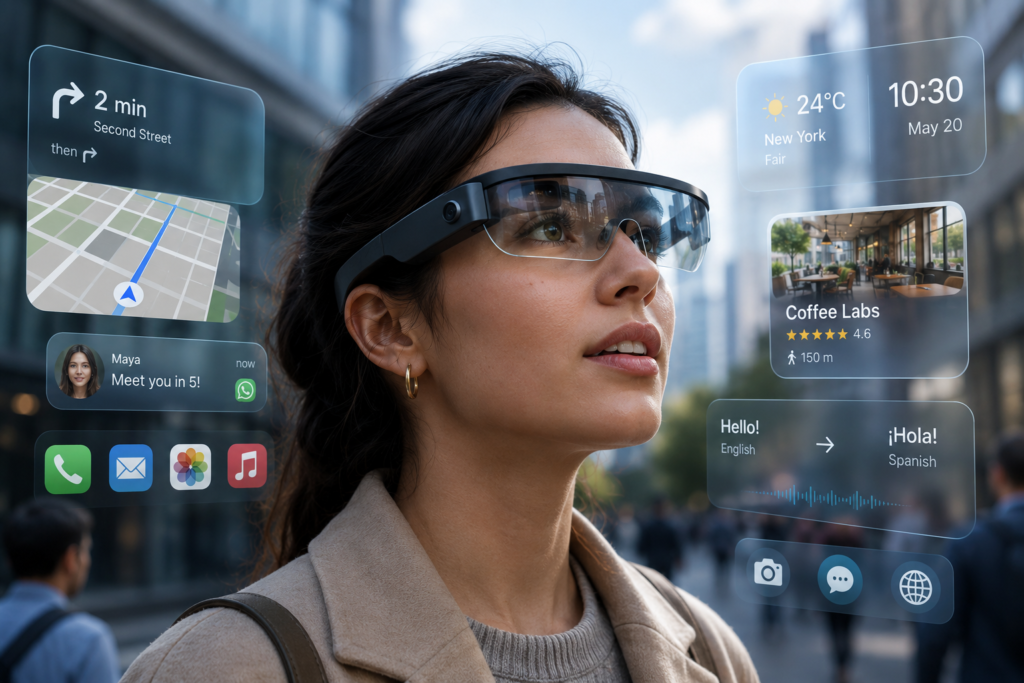
The idea that tech giants envision future beyond smartphones is most visible in the race to develop practical AR glasses.
How AR glasses will reshape daily life
AR glasses could display directions while walking, translate conversations in real time, provide notifications, and show relevant information directly within a user’s field of view.
This removes the need to constantly check a phone.
Why AR has the strongest potential
Unlike virtual reality, augmented reality enhances the real world rather than replacing it.
People can remain aware of their surroundings while accessing digital information naturally.
That balance makes AR glasses one of the strongest candidates to become the next mainstream computing device.
Spatial Computing: The Evolution of Immersive Interfaces
What makes spatial computing so transformative?
Spatial computing allows users to interact with digital content in three-dimensional space.
Instead of tapping icons on a screen, people can use gestures, eye movements, voice commands, and physical movement.
This creates a more immersive and intuitive experience.
The biggest players behind spatial computing
Several major technology companies are investing heavily in spatial computing.
Apple, Meta, Samsung, Google, and other industry leaders see this technology as a foundation for future digital experiences.
Their investments suggest confidence in its long-term potential.
AI Assistants and Ambient Intelligence: The Invisible Interface
From voice commands to contextual intelligence
Traditional voice assistants respond when users ask questions.
Future AI systems will understand context, habits, schedules, and preferences.
This allows technology to provide assistance proactively rather than reactively.
How tech giants are reinventing the assistant
Modern AI assistants are evolving into intelligent digital companions.
They can manage tasks, organize information, summarize content, and support decision-making.
As these systems improve, many smartphone interactions may become unnecessary.
Read also: Is 5G Right for Your Business? Infographic Guide
Tech Giants Envision Future Beyond Smartphones With Smart Wearables
Smart wearables are becoming increasingly sophisticated.
Smartwatches monitor health, earbuds provide AI-powered assistance, and connected accessories deliver real-time information.
Future wearable devices may work together as a distributed computing system, reducing reliance on smartphones.
Instead of carrying one primary device, users could access technology through multiple connected products throughout the day.
Foldable & Rollable Displays: The Transitional Stage
Why foldables matter
Foldable devices bridge the gap between smartphones and future computing platforms.
They offer larger displays while remaining portable.
These products help consumers adapt to new device formats gradually.
The long-term impact
Foldable and rollable displays may not replace smartphones completely.
However, they demonstrate how hardware can evolve beyond traditional rectangular screens.
Their development provides valuable insights for future device design.
Consumer Behavior Is Accelerating the Shift
People are tired of constant screen time
Many users are looking for healthier relationships with technology.
Excessive screen use has raised concerns about distraction, productivity, and mental well-being.
New devices aim to reduce these challenges.
The desire for seamless connectivity is increasing
Consumers expect technology to work effortlessly across devices and environments.
They want information available instantly without switching between apps and screens.
Younger generations prefer immersive experiences
Younger users often embrace new digital experiences quickly.
Interactive technologies, virtual environments, and immersive platforms continue gaining popularity among younger audiences.
This trend supports the move toward next-generation computing.
How Life Will Look Without Smartphones
Communication will become more natural and invisible
Messages, calls, and notifications may appear through wearables or AI-powered systems without requiring users to pull out a phone.
Workspaces will no longer require screens
Virtual workspaces could appear wherever needed.
Digital displays may exist within physical environments rather than on separate monitors.
Navigation and daily assistance become effortless
Directions, reminders, translations, and recommendations could appear automatically when relevant.
Technology becomes more helpful while demanding less attention.
Entertainment will leave the screen
Movies, games, and interactive content may become immersive experiences that surround users instead of remaining confined to displays.
Challenges Standing in the Way of a Post-Smartphone Future
Privacy and surveillance concerns
Advanced wearable devices collect significant amounts of personal data.
Protecting user privacy remains a major challenge.
Hardware adoption barriers
New technologies often face high costs and limited availability during early stages.
Mass adoption requires affordable products and clear benefits.
Social acceptance
People must feel comfortable wearing and using new devices in public settings.
Social norms play an important role in technology adoption.
Ethical and regulatory challenges
Governments and regulators will need to address concerns related to AI, data collection, security, and digital rights.
Clear guidelines will help support responsible innovation.
The Timeline: When Will Smartphones Truly Become Secondary?
Most experts believe smartphones will remain important throughout the next decade.
However, their role may gradually shift from primary device to supporting device.
By the 2030s, many daily tasks could be handled through smart glasses, AI assistants, wearables, and spatial computing platforms.
The transition will likely happen slowly rather than through a sudden replacement.
Conclusion
The smartphone era is far from over, but change is already underway. Technology leaders are investing heavily in artificial intelligence, augmented reality, spatial computing, and wearable devices that promise more natural digital experiences. While no single product has emerged as the definitive successor, the direction is becoming clear. Future technology will be more immersive, more intelligent, and less dependent on traditional screens. As these innovations mature, smartphones may gradually become just one part of a much larger connected ecosystem.
(FAQs)
Will smartphones completely disappear in the future?
Probably not. Smartphones will likely remain useful, but their importance may decrease as new technologies become more capable.
What device is most likely to replace smartphones?
Augmented reality glasses are widely considered the strongest candidate due to their ability to provide information without requiring a handheld device.
How will AI change life without smartphones?
AI can deliver assistance through wearables, smart environments, and connected devices, reducing the need for constant screen interaction.
Which companies are leading the post-smartphone future?
Apple, Google, Meta, Samsung, and several other technology companies are investing heavily in next-generation computing platforms.
When will smartphones stop being the main device?
Most analysts expect smartphones to remain dominant for several years, with significant changes likely occurring during the 2030s.
Read also: FSI Blogs US: Expert Insights, Trends & Practical Tips